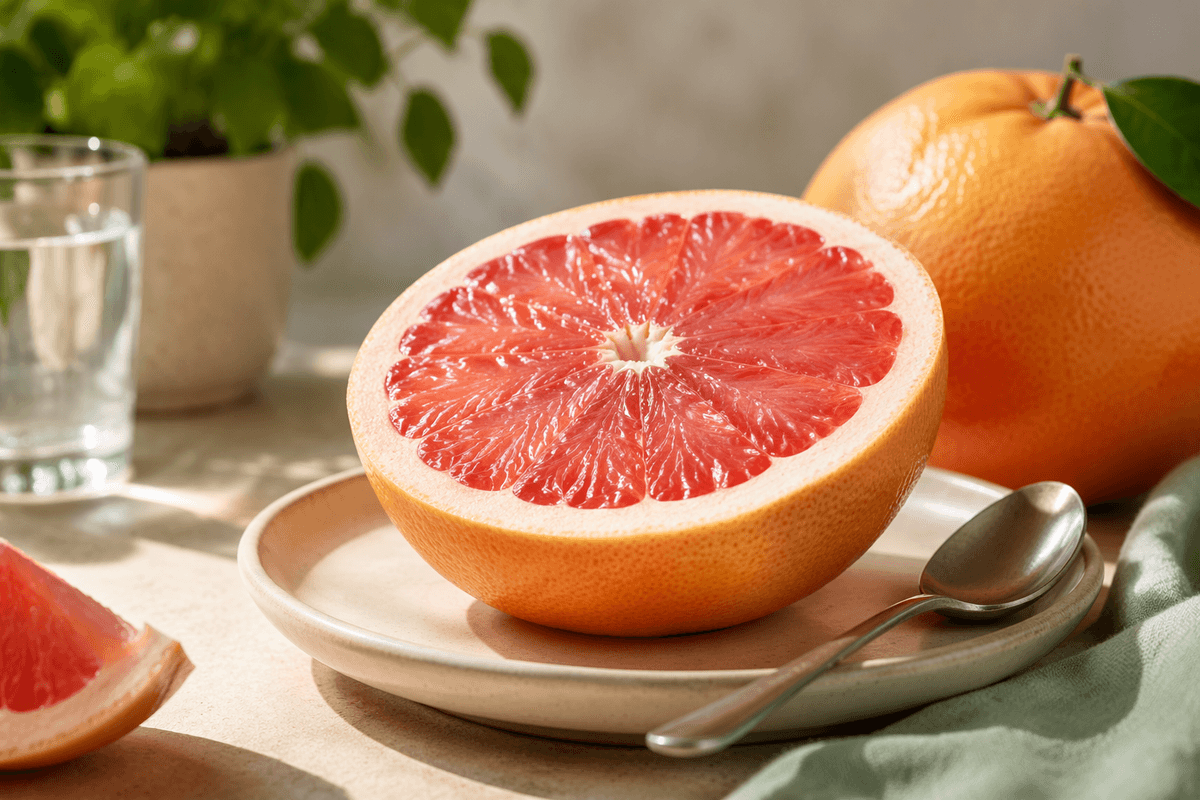
Why grapefruit feels different from other fruits
You notice it the first time you swap your usual mid-afternoon snack for half a grapefruit: it’s not exactly “sweet,” it’s sharp, almost mouth-drying, and it lingers. That slightly bitter, bright taste can make it harder to mindlessly eat fast, which is part of why grapefruit can feel so different from softer, sweeter fruits you can finish without thinking.
Volume matters too. Grapefruit is mostly water, and when you pair that with its fiber, it can take up more space in your stomach without adding a lot of calories. For busy days, that often shows up as a quieter urge to keep grazing—though it’s not perfectly consistent, especially if you’re already stressed, sleep-deprived, or eating on the run.
There’s also a practical catch people miss: grapefruit can interfere with certain medications. If you’re on any regular prescriptions and the pattern becomes a daily habit, it’s worth double-checking that it’s actually a safe “easy swap,” not an accidental complication.
Vitamin C and antioxidants that support daily resilience
Sometimes it’s the small stuff you notice first: your hands don’t feel quite as dry, or that “run-down” feeling after a few late nights doesn’t hit as hard. It’s easy to chalk that up to the weather or a calmer week, but when grapefruit shows up more often, you’re also quietly adding a solid dose of vitamin C—one of those nutrients people don’t think about until their intake has been low for a while.
Vitamin C supports normal immune function, but it’s also used in everyday repair work, like collagen production for skin and connective tissue. Pair that with grapefruit’s plant compounds (including flavonoids), and you’re getting more antioxidant activity in your day without needing a supplement routine. It’s not a “shield”: if overall meals are still light on produce, or stress and sleep are off, the benefit can feel subtle and uneven.
Still, as a snack swap, grapefruit can be a straightforward way to nudge diet quality up—especially on weeks when everything else feels too busy to optimize.
Fiber, water, and fullness between meals
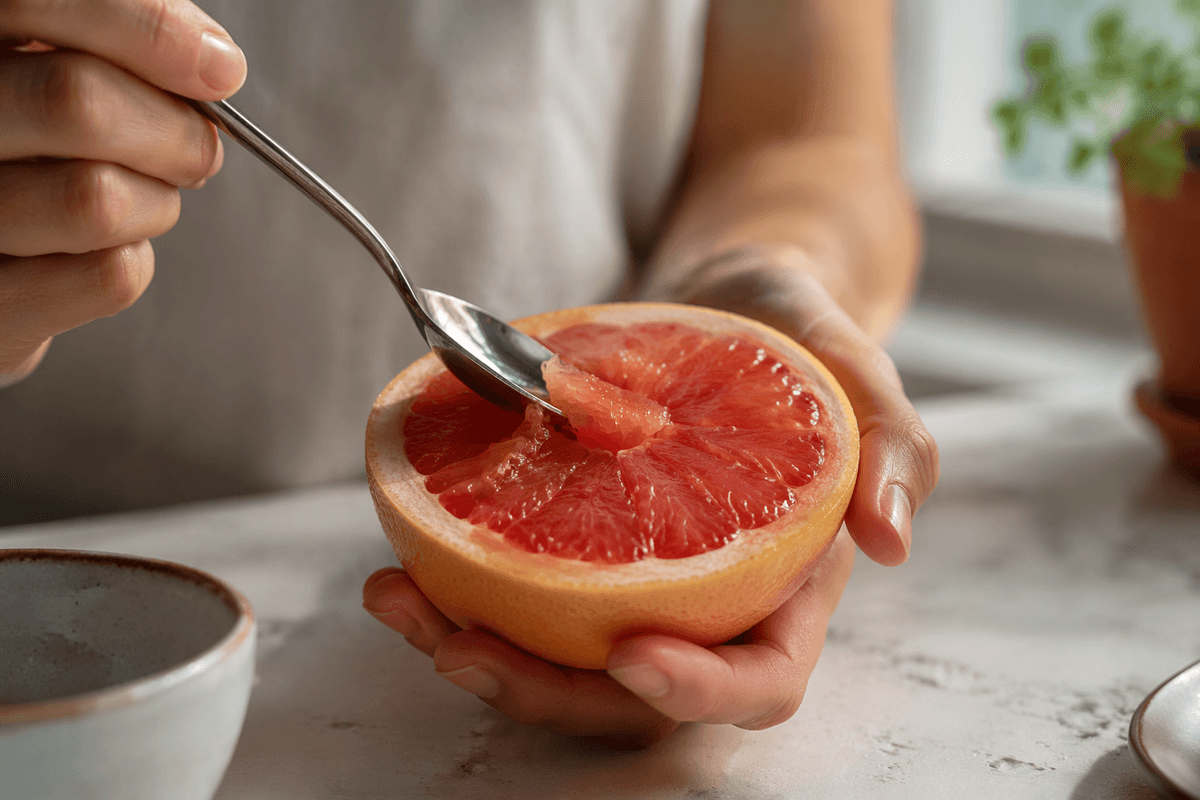
You might notice it most on the days you don’t have time for a real break: you finish half a grapefruit and, oddly, the usual hunt for something crunchy or sweet doesn’t feel as urgent. That’s partly the “bulk” effect—grapefruit brings a lot of water, and its fiber helps hold that volume in your stomach a bit longer, which can make between-meal fullness cues feel clearer.
Fiber also changes the pace of digestion. Instead of a quick hit that fades fast, it can slow how quickly food moves through, which for some people shows up as steadier energy and more predictable bathroom timing. It’s not guaranteed, though; if the rest of the day is low on fiber, or you’re dehydrated, the effect can feel inconsistent—or even a little uncomfortable at first.
As a practical swap, grapefruit tends to work best when it replaces a snack that’s easy to overeat, not when it’s added on top. And if grapefruit is becoming a daily habit, the medication-interaction issue is still worth keeping in the back of your mind.
How grapefruit can fit blood sugar patterns
It can be a little surprising when the “3 p.m. crash” doesn’t hit as hard after a grapefruit snack—until the next day, when it does. That inconsistency is part of what confuses people about blood sugar: it’s rarely just one food, but the whole setup around it, including what you ate earlier, how much you slept, and whether the snack is replacing something sugary or simply stacking on top.
Grapefruit tends to fit steadier patterns because it’s mostly water with some fiber, so it takes up space and slows the pace of eating and digestion. That usually means less of a sharp spike-and-drop feeling than you’d get from juice, candy, or baked snacks. Still, if you pair it with something protein- or fat-free and you’re already running on fumes, it may not “hold” you for long.
For people watching “numbers” at checkups, grapefruit often works best as a swap that supports portion control—just with the quiet caveat that grapefruit-med interactions can matter more once it becomes routine.
Heart-friendly nutrients and everyday blood pressure context
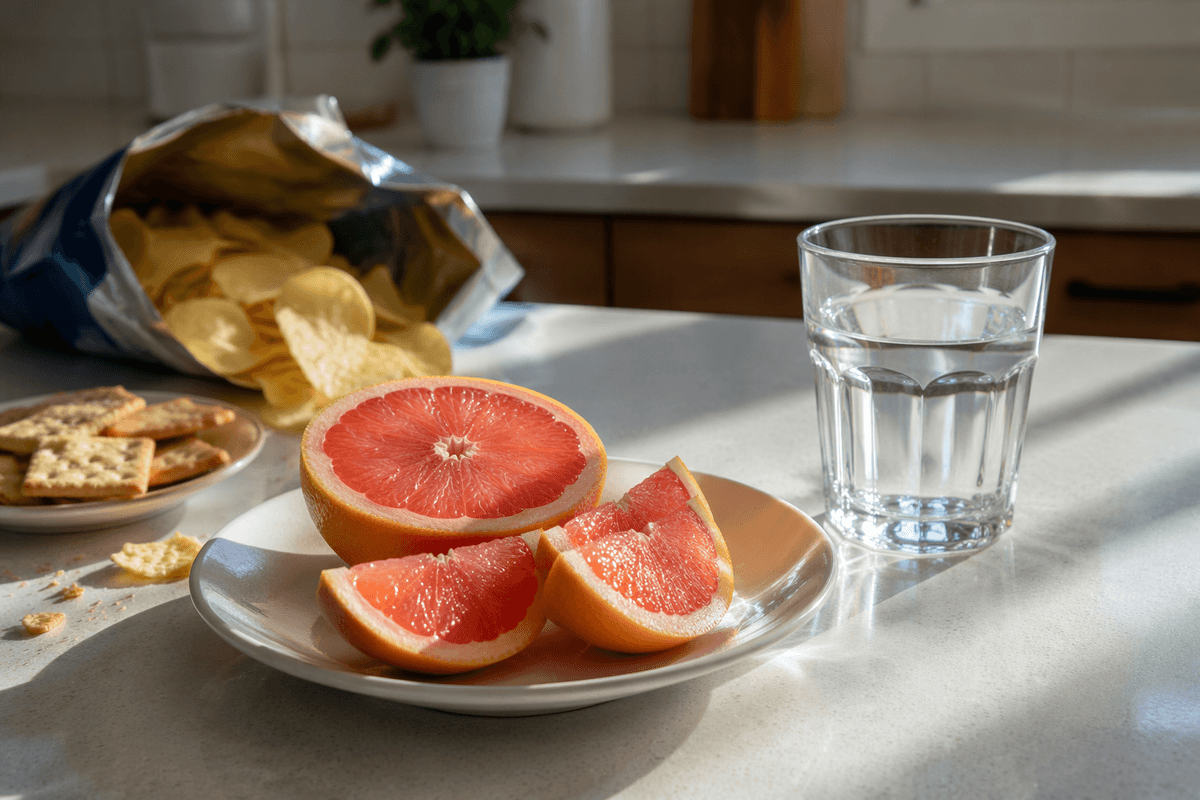
It’s often a small, annoying moment that makes you think about blood pressure: your fingers look a little puffy after a salty lunch, or you feel extra thirsty later and can’t quite tell if it’s the heat, stress, or what you ate. When grapefruit shows up as the afternoon snack instead of chips, crackers, or a packaged bar, it quietly changes what’s driving the day—less sodium, more water, and more volume.
One reason it can feel “heart-friendly” in real life is potassium. Potassium helps your body balance sodium and manage fluid, which can matter when your usual pattern includes takeout, deli foods, or convenience meals. Grapefruit also brings vitamin C and other plant compounds that support normal blood vessel function over time, though the effect isn’t something most people can feel immediately.
It won’t cancel out a high-salt day, and if you’re tracking pressure at home, the numbers can still bounce around from sleep, caffeine, and deadlines. It’s more of a steadying nudge than a quick fix.
A reasonable habit that can backfire unexpectedly
The “backfire” usually shows up in a mundane way: you start doing grapefruit every day because it feels clean and easy, and then one week you feel a little jittery, too flushed, or oddly tired—and you assume it’s stress. But for some people, the issue isn’t the fruit itself; it’s that grapefruit can change how certain medications are processed, so a normal dose can land more strongly than expected. It’s the kind of problem that doesn’t look like a food issue at first, especially when everything else in your routine feels unchanged.
Even without medications, grapefruit’s acidity can be a quiet deal-breaker. If you already get occasional heartburn, or your stomach feels touchy when you eat on an empty stomach, the “healthy snack” can start to feel like discomfort, not support. And if you’re rushing, the sour bite can make you skip it halfway through—so the habit becomes inconsistent.
It helps to treat grapefruit as a useful swap, not a rule. If it keeps working, great; if it starts creating friction, that’s information worth listening to.
Making grapefruit easier to keep eating consistently
It usually falls apart on a Tuesday: you open the fridge, see a whole grapefruit, and realize you don’t have the patience for sticky fingers and a spoon. The fruit isn’t hard, it’s just a little “extra,” and that small friction is often what pushes people back toward grab-and-go snacks that don’t fill them up for long.
Consistency tends to improve when grapefruit feels more like a ready option than a project. Some people do better with a pre-peeled sectioned bowl they can finish quickly, or they keep grapefruit cups (in juice, not syrup) for travel days when fresh fruit won’t happen. The convenience versions can vary in texture and tang, so the habit may still wobble week to week.
If the sourness feels too sharp on an empty stomach, it may “sit” better alongside something simple like yogurt, nuts, or a meal—so it supports fullness instead of just adding acidity. And if grapefruit is becoming routine, the medication-interaction question is still worth keeping in mind as your life changes.