The daily smoothie promise versus daily reality
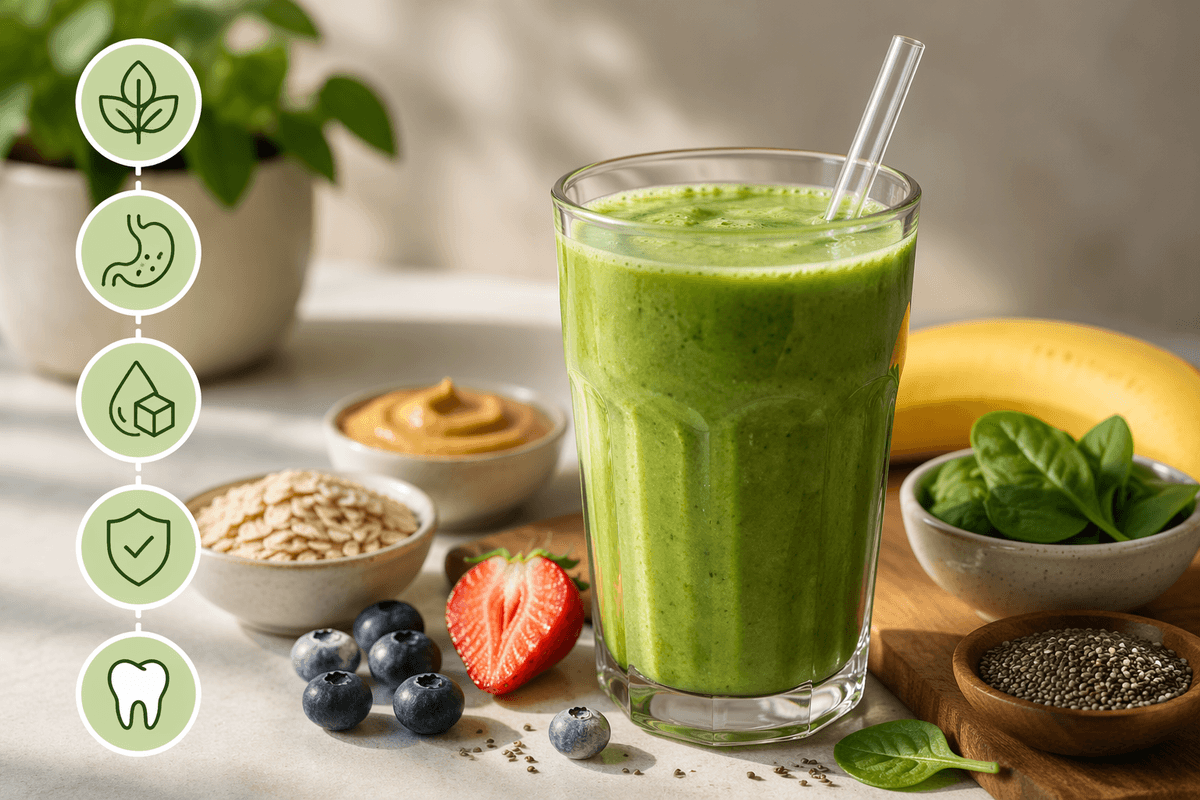
The first few mornings, it feels clean and efficient: a cup, a lid, a quick rinse, and you’re out the door with something that looks like “healthy.” Then a small snag shows up. You finish it fast, and an hour or two later you’re oddly snacky, or you notice you’re thinking about food sooner than you expected.
Part of the disconnect is that blending changes how the same ingredients behave. When fruit, oats, or even greens are broken down into a drinkable texture, it can be easier to take in more quickly, with less chewing and less time for your body to register “I ate.” If the smoothie leans heavy on fruit or juice and light on protein or fat, it may feel energizing at first, then fade into a dip that’s hard to pin on the smoothie itself.
The “same” smoothie shifts when a banana is bigger, the pour is longer, or a generous spoonful of nut butter turns into two. Over a week, those small changes can quietly decide whether your smoothie routine supports steadier mornings or keeps you chasing hunger and energy all day.
Your hunger cues may shift in surprising ways

Mid-morning is where people tend to notice it first: you sip what felt like a solid breakfast, and then your stomach feels empty in a way that doesn’t match the calories you just drank. Sometimes it’s not true hunger so much as a “searching” feeling—wanting something crunchy, salty, or warm—because a smoothie can land more like a beverage than a meal in your routine.
Chewing and texture matter more than most of us expect. When food is already broken down, it can move through the stomach faster, and the usual pace cues (time spent eating, jaw work, a gradual stretch) are smaller. If the smoothie is mostly fruit, juice, or sweetened yogurt, the quick lift can make you feel fine…until you’re suddenly distracted by hunger again.
You might blame stress, a busy calendar, or “not enough sleep,” when the pattern is really about balance: enough protein and some fat tend to slow the slide, while a thinner, sweeter blend can leave your appetite louder by late morning—even if nothing about your day feels different.
Blood sugar swings depend on what you blend
It’s usually around late morning that the “healthy” smoothie starts to feel a little suspicious. Your focus gets fuzzy, you’re calmer for a moment after drinking it, and then you’re suddenly hunting for something—coffee, a granola bar, whatever is fastest—like your energy dropped through a trapdoor.
That swing often depends less on the idea of a smoothie and more on what’s doing the heavy lifting inside it. A blend built mostly from fruit, juice, flavored yogurt, or honey can act like a quick dose of easy-to-absorb carbohydrate, especially when it’s thin enough to drink quickly. In some situations, that can mean a faster rise in blood sugar, followed by a sharper fall that feels like irritability, shakiness, or “I need a snack now,” even if the smoothie had plenty of vitamins.
But the same cup can behave very differently when there’s enough protein and a bit of fat—Greek yogurt, milk, soy, protein powder, nut butter—plus fiber from whole fruit, oats, chia, or ground flax. Those tend to slow how quickly it empties from the stomach. The frustrating part is the inconsistency: swapping juice for milk, using two dates instead of one, or adding an extra banana can quietly turn a steady morning into a chase.
Gut comfort changes as fiber and FODMAPs rise
A few days in, it might not be hunger you notice first, but your stomach. The smoothie still “goes down easy,” yet you feel puffier by mid-morning, or your usual bathroom rhythm gets a little unpredictable—fine one day, off the next. That inconsistency is what throws people, especially when the ingredients look wholesome.
Blending can quietly raise your fiber load, and it can do it fast. A handful of spinach, berries, chia, oats, and a banana can add up to a lot more fermentable material than your gut is used to handling at breakfast. In some situations, that extra fiber pulls more water into the intestines and speeds things along; in others, it slows things down if your overall fluids or meal timing don’t match.
Then there’s the FODMAP piece: ingredients like certain fruits, dairy-based yogurts, honey, and “health” add-ins can ferment more for some people, creating gas and pressure that feels like something is wrong with the smoothie—when it may just be the combination and the daily repetition.
Nutrient intake can improve while balance narrows
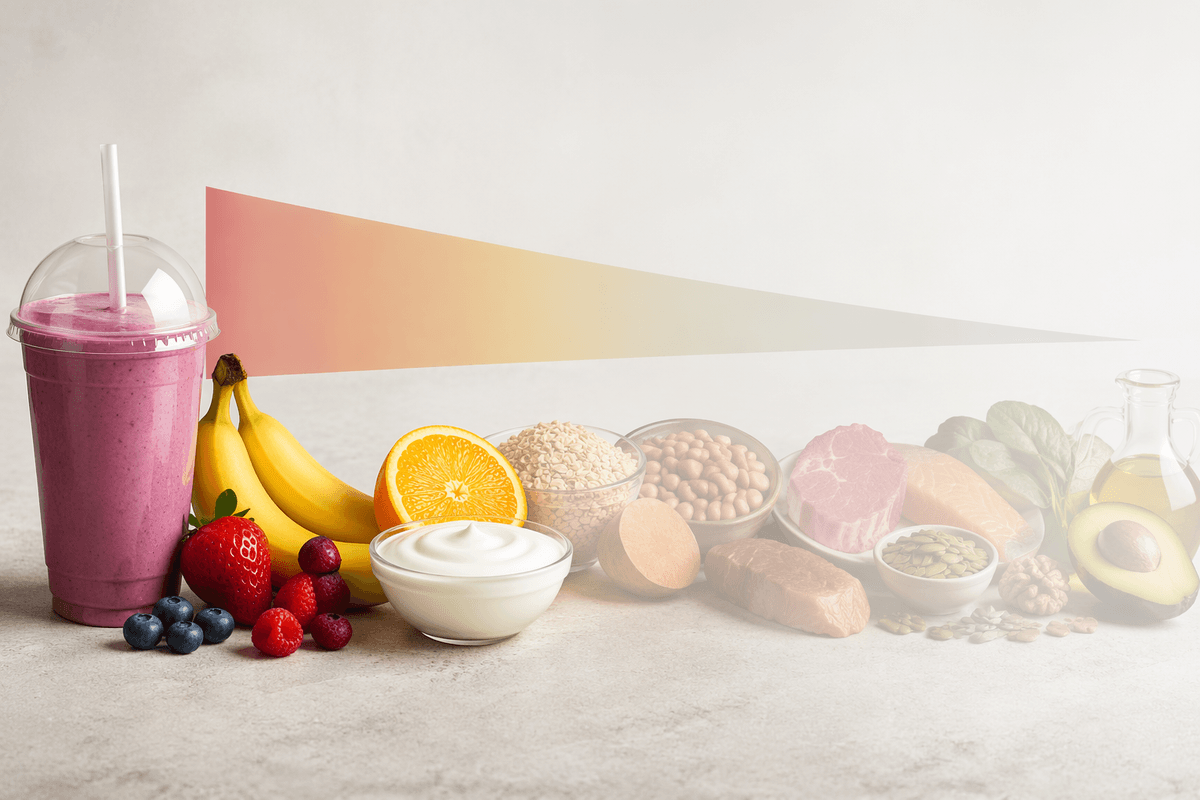
You may notice it in a small, almost reassuring way: your grocery list looks “better” than it used to. More berries, more spinach, more yogurt, more seeds. On paper, it can feel like you’re finally checking the vitamin-and-mineral boxes you used to miss at breakfast, especially if the smoothie replaced a pastry, a drive-thru sandwich, or nothing at all.
But that same repeatable cup can also narrow what you get over the rest of the morning. When breakfast becomes a reliable blend, you may stop rotating in foods that bring different nutrients and textures—eggs, beans, whole grains you chew, even leftovers. It’s not that the smoothie is “missing” nutrition; it’s that it can lean heavily toward a few categories (fruit-forward carbs, a specific dairy or protein base) while other needs—protein at a higher dose, iron and zinc-rich foods, longer-lasting fats—depend on whether you remembered to add them.
If the smoothie keeps you regular and feels lighter, it’s easy to assume it’s automatically balanced. Then the signals show up sideways: you’re hungry earlier, you crave something salty later, or your energy feels oddly dependent on what else you can fit in before lunch.
Add-ins quietly change calories, cost, and consistency
It often shows up when you’re rinsing the blender and notice the spoon you used twice. A drizzle of honey to “smooth it out,” a bigger scoop of nut butter because it tasted thin, an extra handful of granola because you want it to feel like a meal. None of those choices feel dramatic in the moment, but they can quietly turn a light breakfast into something closer to a dessert-with-benefits, especially when the smoothie still looks like fruit and greens.
Add-ins are dense by design. Nuts, seeds, coconut, oats, and protein powders can help with staying power, but the line between “supportive” and “accidentally a lot” is thin when you’re eyeballing tablespoons. Sweeteners and dried fruit can stack quickly too, because they blend in without changing volume much—so you may not feel like you added much, even if the calorie and sugar load climbed.
Then there’s the practical drift: the cost per cup rises, the texture gets harder to predict, and you start adjusting on the fly. One day it’s thick enough to sip slowly; the next it’s so easy to drink that it disappears in two minutes, and your body reads it more like a beverage than a meal again.
Small daily exposures affect teeth and routines
You notice it when you take the first sip and your teeth flinch a little—cold, tart, maybe a bit gritty. It’s easy to brush it off because the smoothie “counts” as fruit, but sipping something acidic (citrus, berries, pineapple) day after day can be a different kind of exposure than eating the same foods whole. When it’s blended, those acids and sugars can coat teeth more evenly, and if you tend to sip it slowly during a commute or between meetings, the contact time stretches out without you really noticing.
The routine side can be just as sneaky. A smoothie that lives in a to-go cup often turns into an all-morning beverage, which can blur the line between a meal and constant snacking. Some days that feels helpful; other days it quietly keeps your mouth “busy,” makes it harder to read true hunger, and adds one more hygiene chore—rinsing, re-sipping, re-brushing—on a schedule that’s already tight.
If you start noticing sensitivity, more morning breath, or a stickier feel on your teeth by lunch, it may not mean anything is “wrong” with smoothies. It may just be the daily repetition of small exposures, plus the way the habit fits into real life.