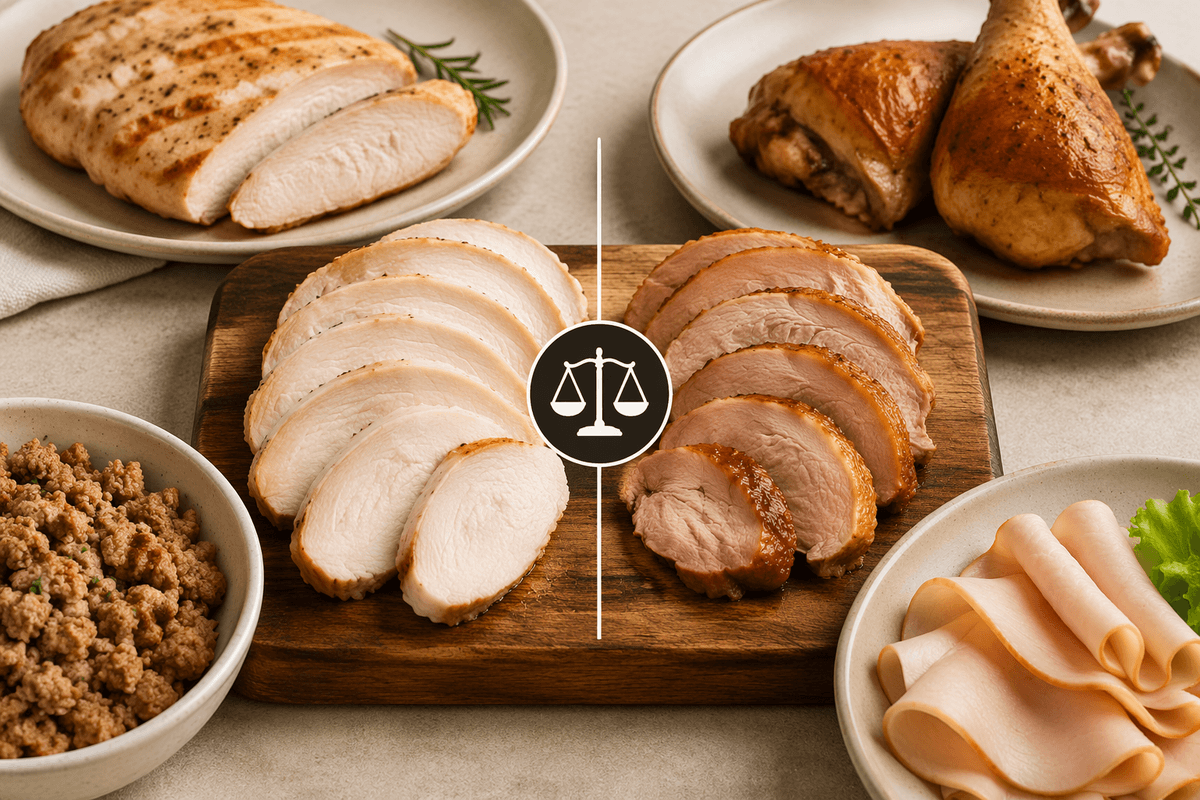
Why ham feels like an easy protein shortcut
It usually starts with a fast sandwich decision: a couple of ham slices feel “countable,” like you can just add them up and move on. Compared with cooking chicken or draining tuna, ham looks tidy—already cooked, already salted, already thin. You can fold it into an omelet, stack it on bread, or snack on it straight from the fridge and assume you just added a reliable chunk of protein.
The snag is that the “slice” is a moving target. Deli counters cut thicker or thinner, brands portion differently, and some hams carry more added water from brining. More water means the same-looking pile can weigh less in actual meat solids, so protein per bite drops. Fat plays a quieter role too: a fattier ham can taste richer while contributing fewer grams of protein per ounce.
That’s why ham can drift from being a protein shortcut to a protein guess. The label’s grams per serving only becomes useful when you notice the serving weight in grams—and whether your usual stack of slices actually matches it.
Protein content swings with water and curing
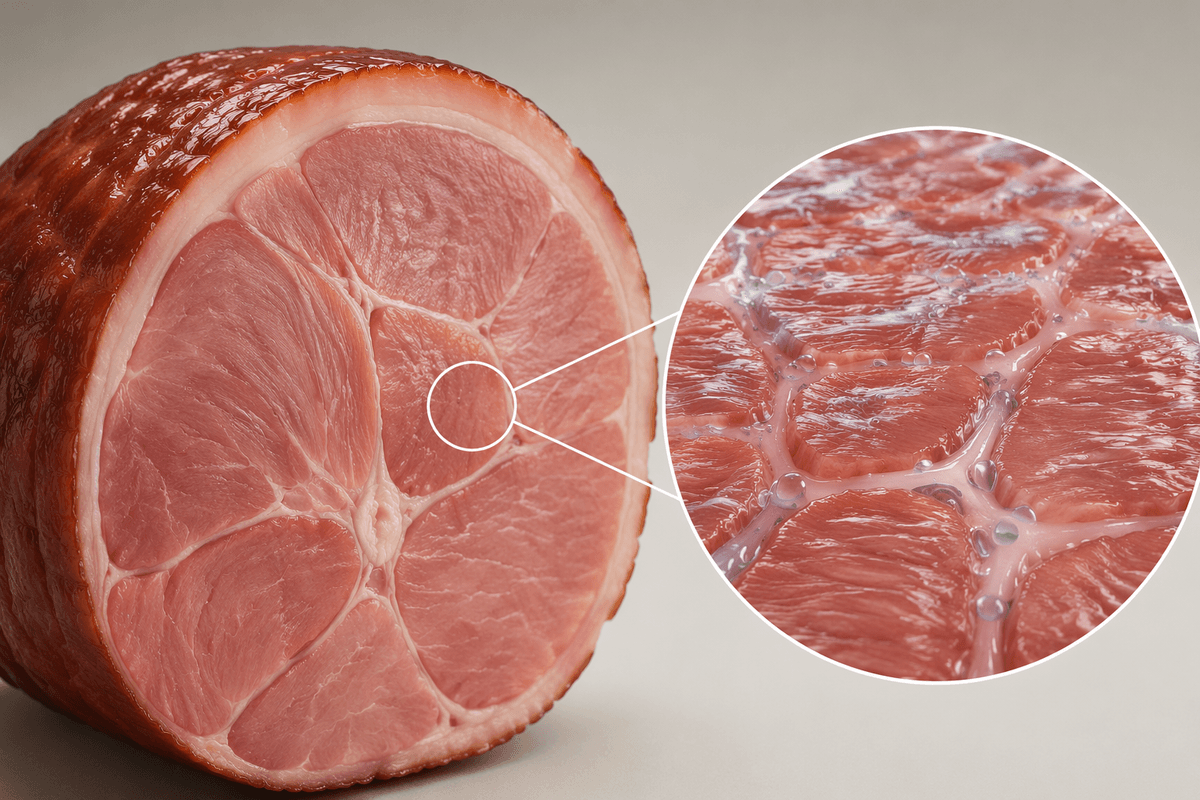
You notice it when the stack looks the same but feels oddly floppy—like it’s wetter than usual. Some hams release a little sheen onto the plate, and the bite can seem softer, less “meaty,” even though the saltiness is still there. That’s often the moment people assume the protein must be the same and the texture is just a brand difference.
In practice, curing can change how concentrated the meat is. A ham that’s taken up more brine (or is labeled as having “added water”) can weigh the same per slice while containing less actual muscle tissue per gram. Since protein lives in the muscle solids, extra water lowers protein density: you may need more grams of product to get the same grams of protein.
Fat shifts the math in a different direction. A richer, marbled ham can feel more filling and taste more substantial, but fat doesn’t contribute much protein—so two “equal” portions by eye can land very differently once you look at protein relative to the serving’s gram weight.
Deli slices versus carved ham at dinner
The difference shows up when you plate it. A deli ham sandwich can look generously stacked, but the slices are often so uniform and thin that “more slices” doesn’t automatically mean “more protein.” If the label calls a serving 56g and your usual two slices are only 35–40g, you’re quietly under-shooting—especially if it’s a wetter, added-water style that spreads out on the scale without bringing much extra muscle.
Carved ham at dinner tends to behave the opposite way. A hand-cut portion is thicker, less airy, and the weight jumps fast—so a piece that seems “about the size of your palm” might land closer to (or beyond) the label serving weight. The limitation is consistency: one night you cut mostly lean, the next you catch a fattier edge, and protein per ounce drops without the portion looking smaller.
That’s why the most useful comparison isn’t slices versus dinner—it’s grams eaten versus grams listed, and whether the ham is built more from meat solids than water and fat.
Label terms that quietly change protein math
The confusing part is when two packages look nearly identical, yet one label reads “ham” and the other says “ham with added water” or “ham and water product.” In the cart, it feels like semantics. On your plate, it can be the difference between a stack that behaves like meat and a stack that’s partly water you’re paying (and chewing) for.
Those phrases usually hint at how diluted the meat solids are. Protein lives in the muscle portion, so when more water is worked in, the protein per gram often slides down even if the sodium and “ham flavor” feel the same. The easiest way to catch it is to ignore the slice count and compare protein to the serving weight: 10g protein per 56g is a different product than 10g per 40g, even if both claim “2 slices.”
“Lean,” “honey,” or “smoked” can also hide fat and sugar differences that change the math slightly. None of this makes a label “bad,” but it does make your usual portion a less reliable protein number.
When a reasonable serving still disappoints
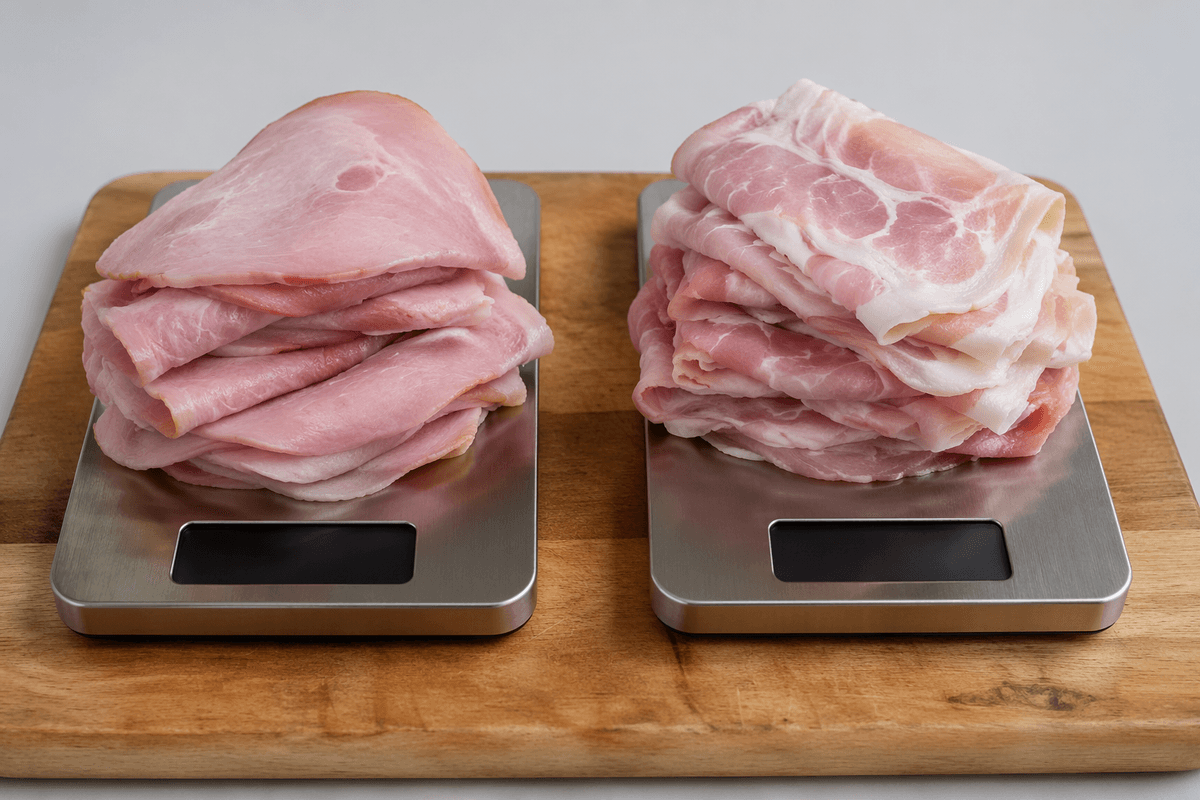
You only notice the gap when the day’s numbers are tight: you built a quick lunch, it looked like enough, and you still end up hunting for “just a little more protein” later. The ham wasn’t absent—it just didn’t pull its weight the way you expected. A stack that feels normal on bread can land closer to a snack once you translate it into grams.
This is where the label can feel strangely unhelpful. Many packages define a serving as two slices, but those slices might be thin and light, or wetter from added water, so the serving weight (in grams) is doing most of the real work. If your “reasonable” portion is 45g because the slices are smaller, and the label’s protein number is tied to 56g, you’re not failing—you’re using a different amount of product than the math assumes.
Fat can create the same disappointment in reverse: the ham tastes richer and more satisfying, but more of its weight is coming from fat rather than muscle. The fix isn’t automatically “eat more slices,” because slices can inflate volume without adding much protein density. It’s noticing when your usual portion looks consistent while its grams—and protein—quietly aren’t.
Cooked weight, raw weight, and shrinking portions
The weird part is when you cook with it and the pile seems to “evaporate.” You dice ham into an omelet or warm it in a pan, and suddenly what looked like a solid handful turns into a thinner layer. It can feel like you mis-measured, but a lot of that change is just moisture leaving—especially with wetter, added-water styles that steam off quickly.
This is where cooked versus as-packaged weight quietly matters. Nutrition labels are based on the product as sold, not after it’s been heated and has lost water. If you portion by “a few slices” and then cook it down, the volume shrinks while the protein you started with stays tied to the original grams. The catch is consistency: different brands (or even different weeks) can lose different amounts of water, so your usual visual portion stops being a reliable stand-in for grams.
Even without cooking, slices can drift thinner over time, making “two slices” look familiar while weighing less. When protein targets are tight, that slow shrink is often the real reason the day ends with an unexpected gap.
Placing ham protein in a real meal context
You feel it most when the rest of the meal is “light”: a sandwich with lots of vegetables, or an omelet padded with peppers and onions. The plate looks full, but the protein isn’t. Ham is often doing support work there—adding salt and texture—so if you’re counting it as the main protein, the numbers can come up short when the slices are thin or water-heavy.
In a meal context, ham tends to work best as a measured add-on. A label that gives, say, 10g protein per 56g serving can be treated like a conversion: if your pile is closer to 30–35g, you’re not getting “a serving,” even if it’s still two slices. That’s also why pairing ham with another steadier protein (eggs, Greek yogurt, cheese, or leftover chicken) often makes targets feel less fragile.
None of this means ham “doesn’t count.” It just counts more reliably when you think in grams of portion, not slices of habit.







![6 Best Seeking Alpha Alternatives [Competitors’ Sites to Use]](static/image/2026/07/14/efb52e0a-28fa-4572-b12f-5ea63c79b09e.png)