Why rose hips feel more than a “vitamin C” food
The first time rose hip tea “does something,” it’s often not dramatic. It can feel more like a quieter recovery the next morning, or skin that doesn’t seem quite as reactive in dry, heated air. That’s where people start to suspect it’s more than a vitamin C trick—because the experience doesn’t line up with the quick, bright punch they expect from citrus or a standard supplement.
Part of the confusion is that vitamin C is the easiest label to remember, but rose hips carry other plant compounds that may nudge the same day-to-day issues people notice: post-activity stiffness, slower bounce-back, and that low hum of irritation that shows up when sleep, diet, and stress aren’t cooperating. In real life, those shifts tend to be gradual and inconsistent, and they can depend on what you’re starting with—someone already eating plenty of produce may feel very little, while someone running on the edge of run-down might notice small changes sooner.
Even then, the “more than vitamin C” feeling can come and go. Preparation matters, amounts vary, and some forms taste pleasant enough to keep using while others become an effort. That’s often where rose hips land: not as a single obvious effect, but as a pattern you only recognize after a few ordinary weeks.
What’s inside rose hips that drives effects
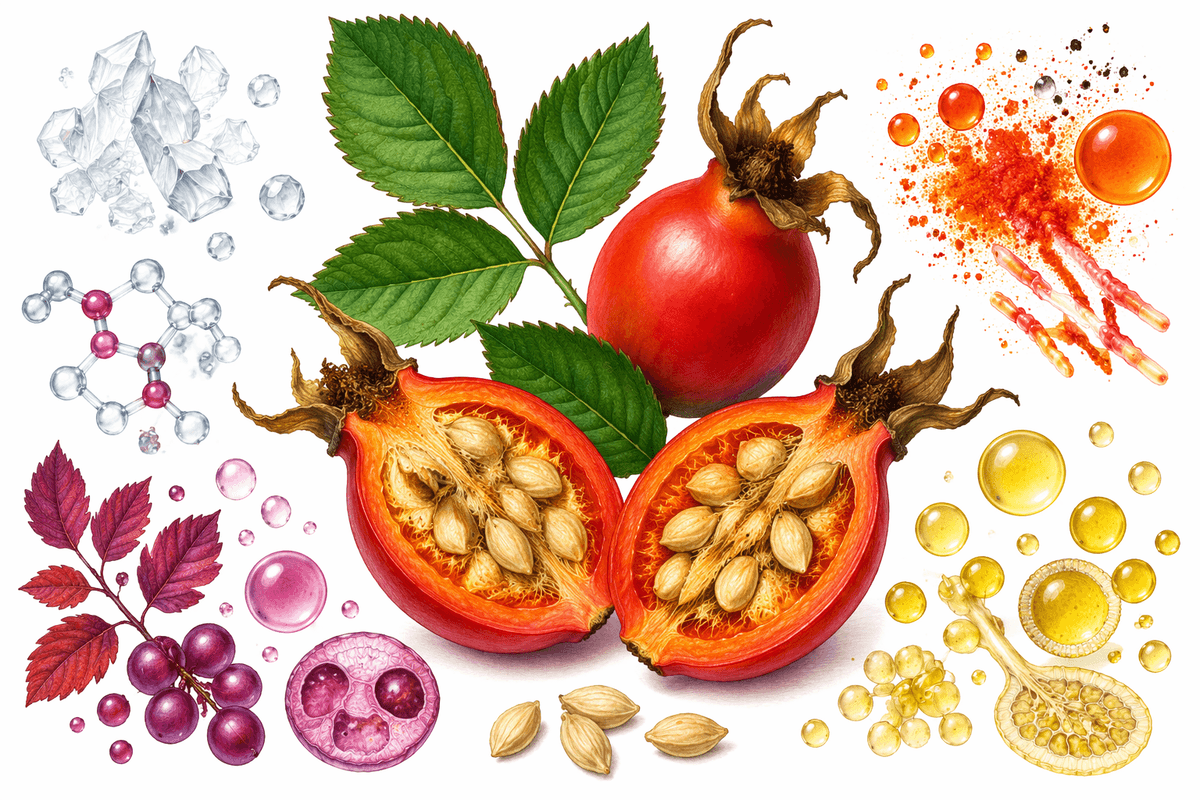
If you’ve ever brewed rose hip tea a little too long and noticed the tartness turning almost “dry” on your tongue, that’s a clue it’s not just about one nutrient. Rose hips carry vitamin C, but also a mix of polyphenols and flavonoids that can taste astringent—plant compounds that, in some situations, line up with the slow-burn issues people track like soreness after activity or skin that feels easily irritated.
There are also carotenoids (the pigments that skew orange-red) and other antioxidants that tend to work more as background support than as a quick hit. Some preparations include rose hip seed components, where certain fatty acids and a galactolipid often discussed in joint-supplement research show up more than you’d expect from a “tea ingredient.”
These pieces don’t transfer equally into every form. Hot water may pull different compounds than a powder, heat and storage can chip away at vitamin C, and oil concentrates more fat-soluble fractions. So two people can “take rose hips” and still end up with noticeably different mixes.
Immune support: subtle shifts, not instant protection
A few days into a scratchy-throat week, it’s easy to blame rose hips when nothing “stops” the cold. That’s usually the wrong expectation. Immune support from foods and herbs tends to show up less as a shield and more as how steady you feel while your body does what it was going to do anyway—energy holding a little better, congestion not escalating as sharply, or the dragged-out tail end feeling slightly less sticky.
Part of what rose hips offer—vitamin C plus polyphenols—connects to oxidative stress and irritation signals that can rise when sleep is short, workouts pile up, or winter routines skew indoor and dry. In those situations, reducing that background strain may indirectly help immune cells work without as much “noise.” But it’s inconsistent: if your baseline is already solid (fruit/veg, protein, rest), the change can be hard to spot, while a rough patch can make small differences feel bigger.
Even the form can quietly shift the outcome. A tea that’s pleasant enough to drink daily may create a steadier habit, while capsules can deliver a higher dose but still won’t produce the instant, obvious “protected” feeling people hope for—and that mismatch is where most disappointment starts.
Joint comfort and stiffness: where evidence clusters
It often shows up when you stand after a long drive or walk downstairs the morning after yard work: not sharp pain, just that “rusty hinge” feeling that takes a few minutes to fade. People sometimes expect rose hips to work like a fast anti-inflammatory, and then get confused when the change—if it happens—looks more like slightly easier movement at the edges of the day.
This is where the research around rose hip supplements tends to cluster: joint comfort, stiffness, and everyday function, especially in people who already have a lot of baseline creakiness. The proposed reason isn’t that joints suddenly rebuild themselves, but that certain rose hip compounds (including polyphenols and that seed-related galactolipid often mentioned in supplements) may nudge low-grade irritation and oxidative stress that can make tissues feel more “swollen” or sensitive after normal use.
Tea may not deliver the same mix or amount as standardized powders or capsules, and the signal can get drowned out by sleep debt, extra bodyweight, a new training block, or just a cold week of inactivity. For some people it’s noticeable; for others it’s a shrug—and both outcomes can make sense.
Skin, gums, and tissue repair expectations versus reality
You notice it in small places first: a hangnail that seems to linger, gums that feel a little tender after a too-enthusiastic flossing streak, skin that stays “tight” longer after a hot shower. It’s easy to map those to rose hips and expect a quick cosmetic payoff, like brightness or faster healing, then feel let down when the mirror doesn’t really change.
What rose hips may influence, if anything shifts, is the slower background work—vitamin C’s role in collagen-making and the way polyphenols can sit upstream of everyday irritation. That can matter for skin and gum tissue because they’re constantly dealing with tiny wear-and-tear. These tissues are also sensitive to sleep, protein intake, smoking or vaping, dry indoor air, and even how aggressively you brush. So the “rose hip effect” can get buried, or only show up as fewer bad days rather than a dramatic turnaround.
And form matters more than people expect. Tea can be comforting but may deliver less vitamin C than a fresh-food source, while powders or capsules can be more consistent yet still won’t override a baseline that’s already stretched thin. For a lot of adults, the most realistic shift is subtle resilience—not a visible reset.
Heart and metabolic signals: promising, often indirect
Sometimes the first “heart” sign people try to read is practical: a heavy meal, then that sluggish, puffy feeling that makes a walk feel harder than it should. It’s tempting to credit (or blame) whatever you’ve been taking lately, but these signals are noisy—sleep, alcohol, sodium, stress, and how much you’ve been sitting can drown out small changes.
Rose hips get discussed here because oxidative stress and low-grade irritation don’t just affect joints and skin; they also tie into how blood vessels respond and how the body handles glucose and fats over time. In some studies, shifts show up more in lab numbers than in an obvious “I feel it” effect—slightly better-looking cholesterol or inflammation markers, for example, without a dramatic change in day-to-day energy. That indirectness can be frustrating, because you may do everything “right” and still not notice much.
It also helps explain why results vary by form and baseline. If your routine already includes fiber, produce, and regular movement, rose hips may feel like a rounding error; if things have been drifting, the same habit can register as fewer off days rather than a clear new normal.
Tea, powder, capsules, oil: benefits and friction points
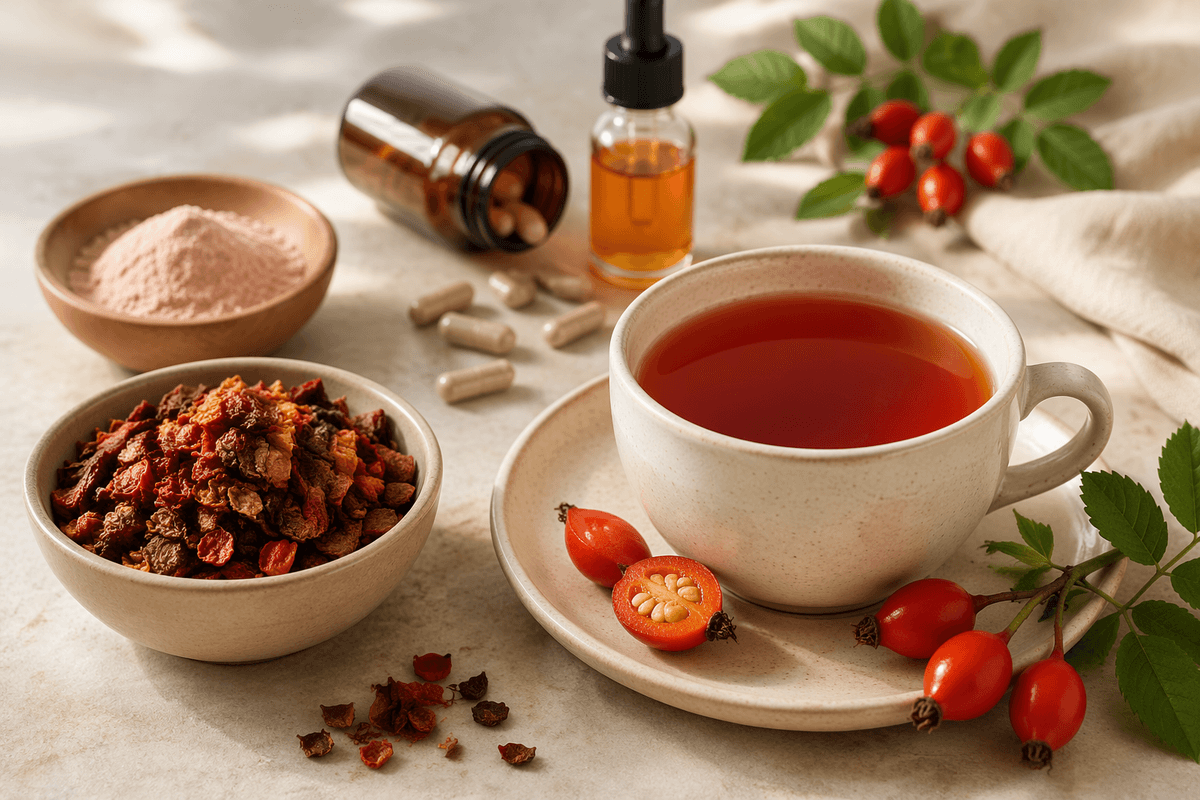
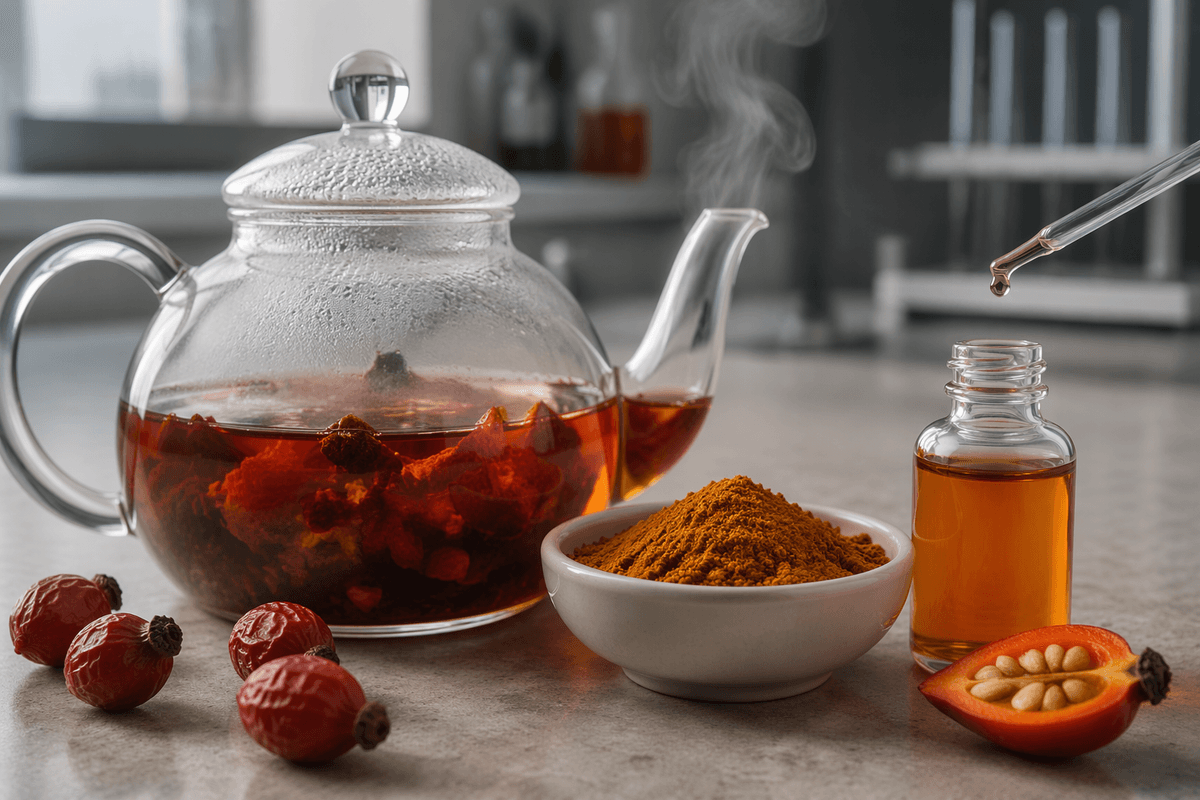
The difference usually announces itself at the sink, not in a symptom log: tea that stains a mug and tastes pleasantly tart, versus a powder that clumps, or a capsule that you forget until bedtime. Those frictions matter because rose hips tend to work, if they work at all, through steady exposure. A form you’ll actually use most days often beats a “better” form that keeps getting skipped.
Tea is the easiest habit-builder, but it’s also the most variable. Steeping time, water temperature, and how the product was dried and stored can all change what ends up in the cup, and vitamin C in particular is not very forgiving. Powder and capsules are usually more consistent for amount, which is why joint-comfort research often leans that direction, but they can bring their own drawbacks—chalky taste, stomach upset for some, or a dose that feels disconnected from food.
Oil is a different lane. It concentrates fat-soluble components and is mostly used for skin feel rather than an “immune” or joint pattern, and it doesn’t automatically map onto what tea or capsules do. In practice, the main benefit of any format is when it fits your baseline and routine well enough that the subtle shifts—fewer rough mornings, less reactive skin days—have a chance to show up.