What “more protein and fiber” really means
You scoop beans into a container and suddenly the numbers feel slippery: the label talks in ½-cup servings, your recipe uses “one can,” and your bowl ends up closer to a full cup. That’s usually where “more protein and fiber” gets misread—not because the beans are mysterious, but because the measuring unit keeps changing mid-thought.
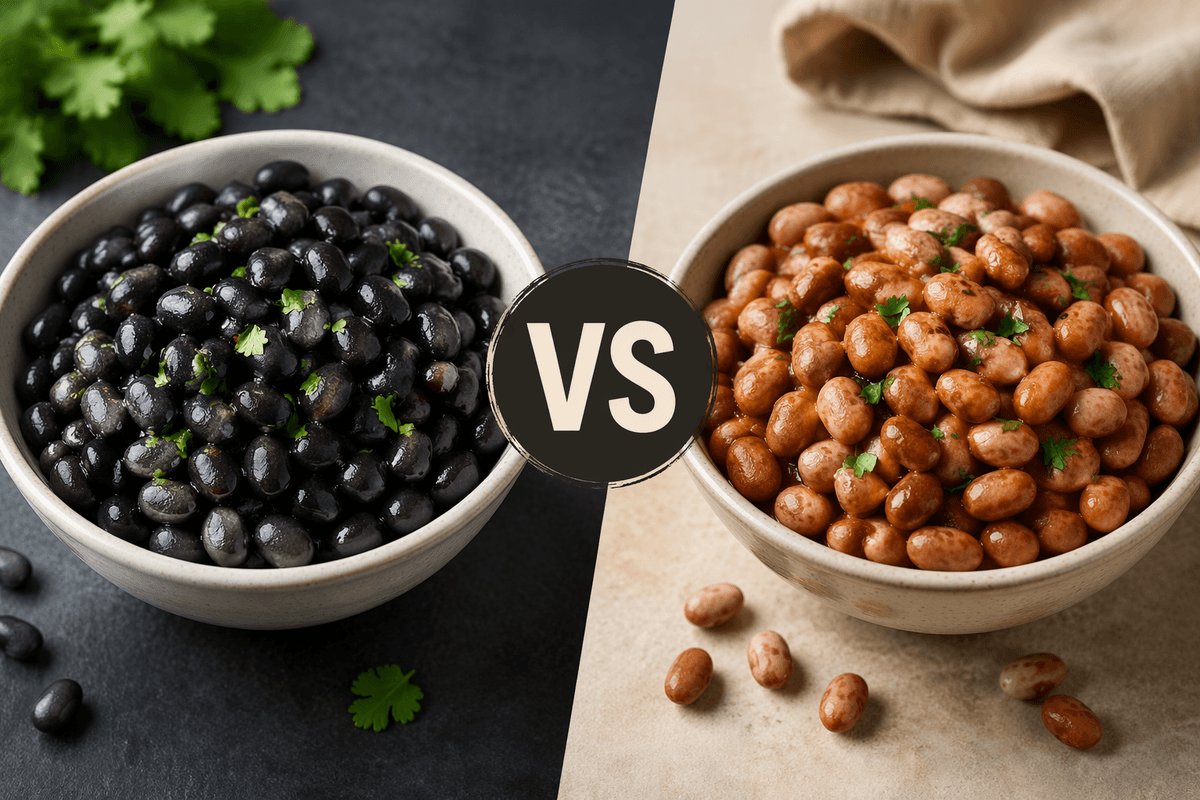
For home cooking, the only comparison that holds is an equal, cooked-and-ready portion (for example, ½ cup cooked black beans versus ½ cup cooked pinto beans). Once you swap in “per can,” “per cup,” or “per 100 grams,” small differences can look dramatic. Draining and rinsing shifts weight, too, so canned numbers don’t always match what lands on your spoon.
And then there’s the quiet inflation from add-ins: rice, cheese, oil, tortillas, even sweet barbecue-style sauces. The bean choice may nudge protein or fiber a little, but the whole plate often decides how filling it feels and how smoothly digestion goes.
Protein comparison in real serving sizes
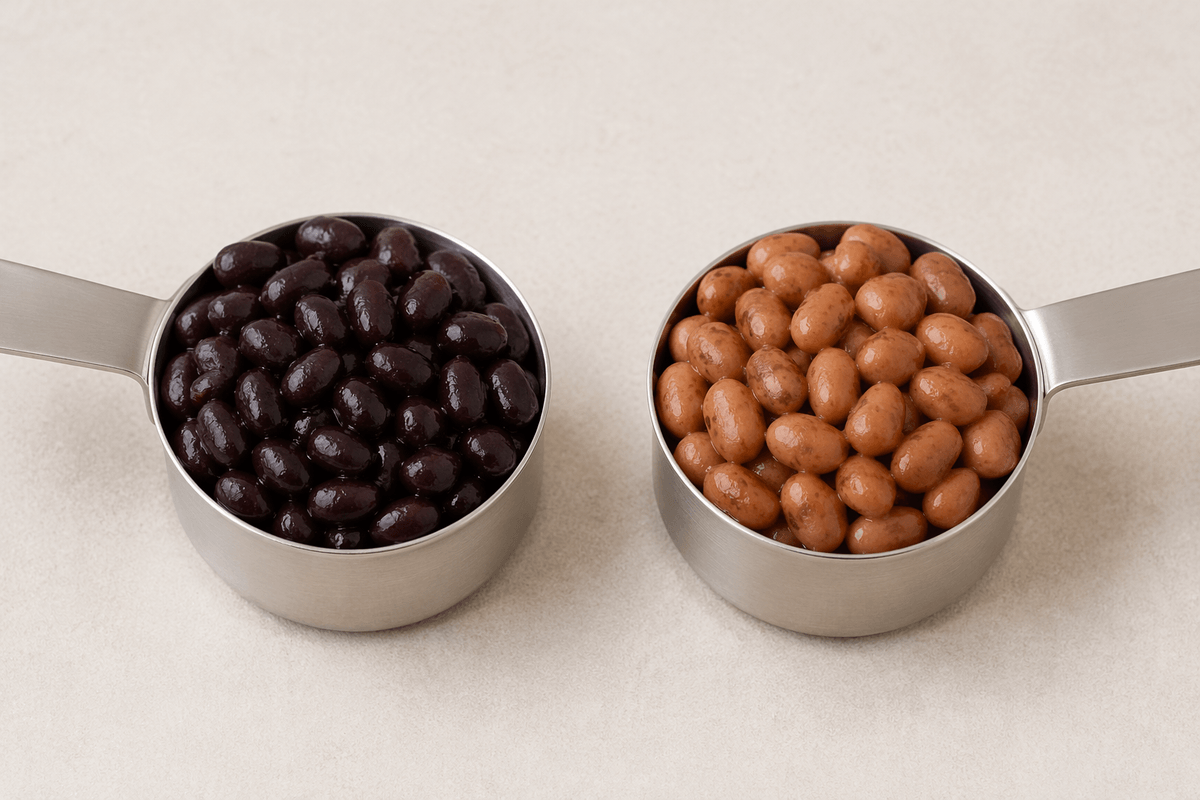
The moment you actually level off a measuring cup, the “winner” usually gets a lot less obvious. A true ½ cup of cooked beans is smaller than most people picture—more of a scoop than a base layer—so jumping from ½ cup to 1 cup quietly doubles protein before you even change the bean.
On an equal cooked portion, black and pinto beans tend to land in the same neighborhood for protein, with differences that may be a gram or two depending on the database or label. Where it gets messy is canned math: a “serving” might be listed as ½ cup, but the can’s yield assumes a certain amount of liquid. Drain and rinse, and the portion weighs less than what the label’s serving implies, even though it looks like the same volume.
That’s why two brands can feel like they “disagree.” The beans didn’t change—your comparison unit did. When you notice one choice keeps you fuller longer, it may be the portion you’re repeating, not a huge protein gap.
Fiber totals differ, but the feel can too
You notice it when you clean up: one container leaves you comfortably settled, and the other has you reaching for water—or feeling a little more air in your belly than you expected. That’s the part fiber labels don’t capture well. Even when black and pinto beans land close on paper, “high fiber” can feel different from meal to meal, especially if you’re repeating the same lunch all week.
On an equal cooked portion, fiber tends to be in the same general range for both, but the spread across cans and databases can look bigger than it is. Some labels count a ½-cup serving that’s partly defined by the can’s liquid yield, while drained beans pack more solids into that same measuring cup. If you’re comparing “per ½ cup” on one brand to “per 130g” on another, you can accidentally crown a fiber winner that’s really just a measuring mismatch.
And in practice, the “fiber feel” often rides on what the beans are doing in the dish. A thicker chili, a refried-style mash, or beans folded into rice can slow down how fast you eat and how quickly the meal empties from your stomach. The bean type matters, but the texture and the way you portion it can quietly matter just as much.
Soluble versus insoluble fiber shifts digestion
Halfway through the afternoon, it can feel like the same “½ cup of beans” either sits quietly in your gut or turns into a little balloon. That difference often gets blamed on the bean—black versus pinto—when it’s more about the mix of fiber types and how the meal was built around them.
Soluble fiber tends to gel when it meets water, so in some situations it may slow how quickly the meal moves along and soften the rise-and-fall in hunger later. Insoluble fiber is more about bulk and “sweep,” which can nudge things toward more regularity—but it can also feel rougher if you go from low fiber to lots of beans fast. Both black and pinto beans contain a blend, but small shifts in that blend won’t show up clearly on labels the way total fiber does.
Processing can blur the experience further. A firmer, intact bean keeps more structure; a refried-style mash breaks it down, sometimes making the same grams of fiber feel gentler (or just easier to eat quickly). So if one bean “digests better” for you, it may be the texture you repeat—whole, smashed, soupy—not a dramatic difference in fiber on paper.
Protein quality depends on the whole plate
You can feel it when the bowl looks the same but your hunger doesn’t behave the same. One day the beans feel “plenty,” and the next you’re hunting for a snack an hour later—especially if the only thing that changed was what you ate them with. That’s where protein quality gets misunderstood: not as “better” beans, but as a different mix of amino acids and how easily your meal adds up to what your body uses.
Black and pinto beans both bring solid plant protein, but they’re not trying to do the whole job alone. When beans are paired with grains (rice, corn tortillas) or a bit of dairy or meat, the overall amino acid pattern of the plate becomes more complete, which can shift how “satisfying” the same scoop feels. On the flip side, a bean-heavy meal that’s mostly beans plus sauce can look protein-forward on paper, yet feel less steady if it’s missing that supporting mix—or if the portion quietly shrank when you drained the can more aggressively than usual.
So when you’re comparing black versus pinto for protein, the more useful question is often what they’re replacing in your routine. The bean choice matters, but the plate around it is usually what turns “a few grams” into an actually noticeable difference.
Cooking and processing quietly change the numbers
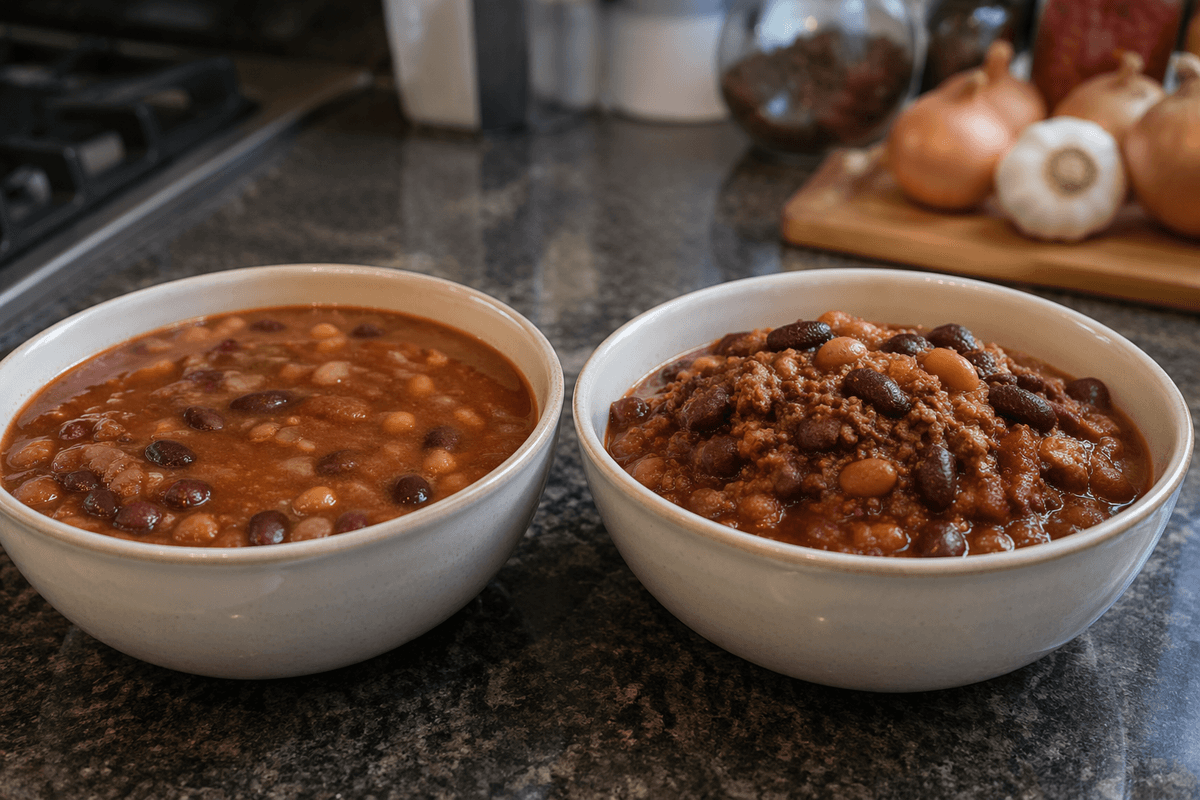
You don’t notice it until you make the same recipe twice: one week the beans stay intact and your portion looks “bigger,” and the next week they simmer down and suddenly the bowl feels denser. The label didn’t change, but cooking did. Longer simmering, pressure cooking, or just letting a chili reduce drives off water, concentrating calories, protein, and fiber per cup—while a soupier batch spreads the same beans out and makes the numbers per cup look lower.
Canned beans add another quiet layer of drift. Some brands pack firmer beans, others pack softer ones that break a little when rinsed, so the “drained” yield can vary even if the can size is identical. If you mash them (refried-style) or blend them into a dip, it also gets easier to eat a larger amount without realizing it, which can make black and pinto feel like they “hit” differently even when their basic protein-and-fiber profile is close.
So when a comparison starts to feel dramatic, it’s often the texture and water content doing the loudest work—more than the bean color on the label.
Choosing between them when both are strong
It usually shows up at packing time: two containers look identical, but one week you feel steady and the next week you’re distracted by either hunger or a heavier, gassier “sit.” When black and pinto are both strong on protein and fiber, the best choice often comes down to which one behaves more predictably in your specific meals.
If you’re chasing consistency, pick the bean that’s easiest for you to portion the same way—same drained yield, same thickness in the pot, same “½ cup means ½ cup” reality. Black beans can read as firmer and hold shape in salads or bowls; pinto beans often lean creamier in tacos, soups, and mash-friendly dishes. Neither is a guaranteed fullness upgrade if your portion quietly shrinks or your add-ins quietly grow.
When the numbers feel too close to call, your repeatable cues—how long you stay satisfied, how your gut feels the next day, and whether your energy dips—are often more honest than a one-gram label difference.