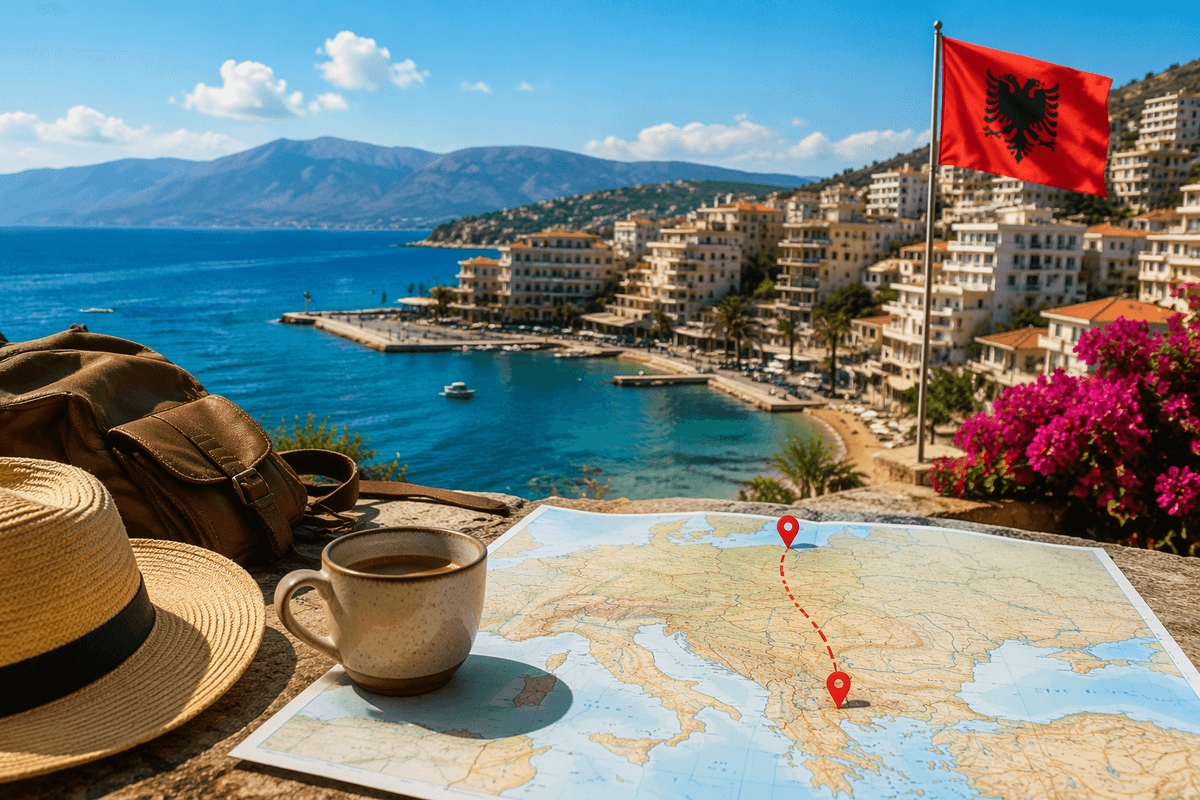
Your second U.S. trip is about contrast
I paused over a U.S. map at 11:47 p.m., cursor hovering between “cheap flight” and “scenic drive,” and realized I was treating the country like Europe. The scale looks tidy on a screen; in practice, a “quick hop” can swallow a half-day once you count airport lines, rental-car shuttles, and the jet-lagged hunt for dinner. That tiny hesitation matters more on a second trip, because you’re no longer collecting icons—you’re trying to feel a different version of the place.
Contrast is the cleanest way to cut through option overload: swap density for distance, polish for grit, skyline weekends for trail mornings. If your first trip was NYC/DC/Boston, a second trip that works is the opposite tempo—New Mexico high desert light, the Pacific Northwest’s damp forests, or the quieter Great Lakes small-city loop—each with its own limitation. The trade-off is obvious: fewer “famous” stops, more time actually being somewhere, which tends to suit travelers who plan 2–3 months ahead and hate burning days in transit.
Season is the referee. Spring can mean mud and late snow in higher parks; late summer can mean smoke and closures out West; hurricane season can tilt the Gulf and Southeast from “bargain” to “stress test.” If you want “real America” without the logistics tax, pick one big contrast and let that decide whether you fly-and-base, or commit to a road trip that’s short on miles and long on evenings.
Start with what you missed first time
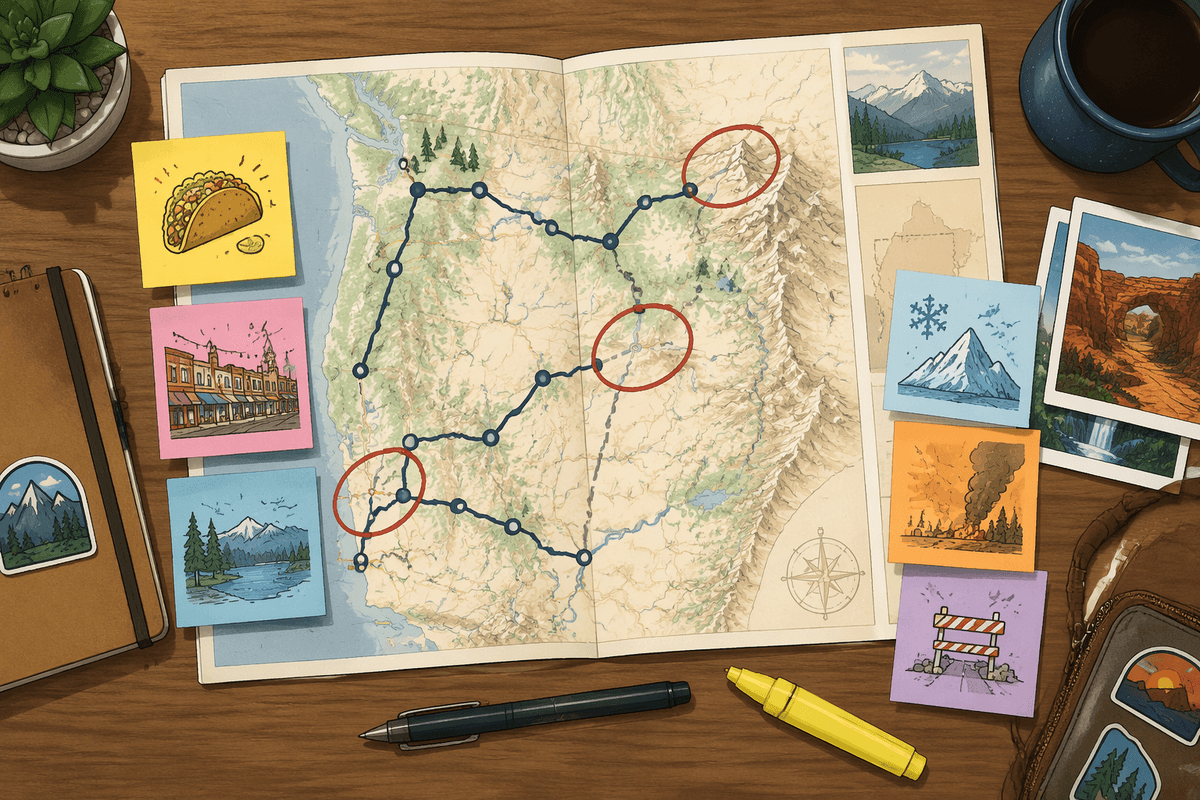
I noticed it standing in a diner line in Queens at 8:10 a.m.—I’d flown back to the “same” city, but the part I remembered wasn’t Times Square, it was the ordinary morning rhythm. My first trip had been efficient: the big museums, the postcard views, the “we’re here, take the photo” circuit. What I missed wasn’t a landmark; it was time-of-day America, the stuff you only see when you’re not sprinting between highlights.
Before you pick a region, do a quick audit of your first itinerary and circle the gaps that actually annoyed you. Did you skip local food because reservations felt like homework? Did you avoid driving and therefore never saw small cities between majors? Or did you aim for nature but land in the wrong season—shuttle systems, trail snow, smoke, or a “scenic road” that was still closed? This is where a second trip gets practical: choose one missed category (neighborhood time, a national park, a music/food city, a lake/mountain corridor) and let that drive the map.
It’s a trade-off between depth and novelty. Repeating one anchor city can be smart if it reduces logistics—direct flight, familiar transit, fewer rental-car days—then you branch out with a tight loop (two bases, not five). If you’re the type who gets itchy staying put, build in one “reset” day anyway: laundry, groceries, an early night, because fatigue is usually what turns a good plan into a messy one.
Pick your pace before picking places
At 6:35 a.m. in a Denver hotel lobby, I watched a couple argue over a paper map: “It’s only four hours,” he said, tracing a line that looked short until you noticed the mountain passes and the weather warning on the TV. I’d made the same mistake before—treating driving time like a fixed number instead of a moving target shaped by fatigue, traffic, and where you can actually stop for food. That moment is usually where a second trip either gets calmer or turns into a transit marathon.
Pick a pace first, because the U.S. punishes itinerary ambition more than it rewards it. If you like late breakfasts, breweries, and wandering a smaller city, a fly-and-base plan works: one main hub, two day trips, and no daily repacking. If you get restless unless the scenery changes, choose a short loop road trip—think 2–3 hours between nights, not 6–8—and accept the trade-off that your best meals might be wherever you can park, not the place you bookmarked.
The cleanest test is to count “friction days.” Flights look efficient until you add early airport arrivals, rental-car counters, and the awkward half-day when you land too late to do anything but hunt dinner. Driving looks romantic until you realize the pretty route has limited lodging, and the cheap motel is 30 minutes past where you wanted to stop. For 10–12 days, I’d rather have two bases and one intentional long transfer than five towns that blur together.
Let season choose the best region
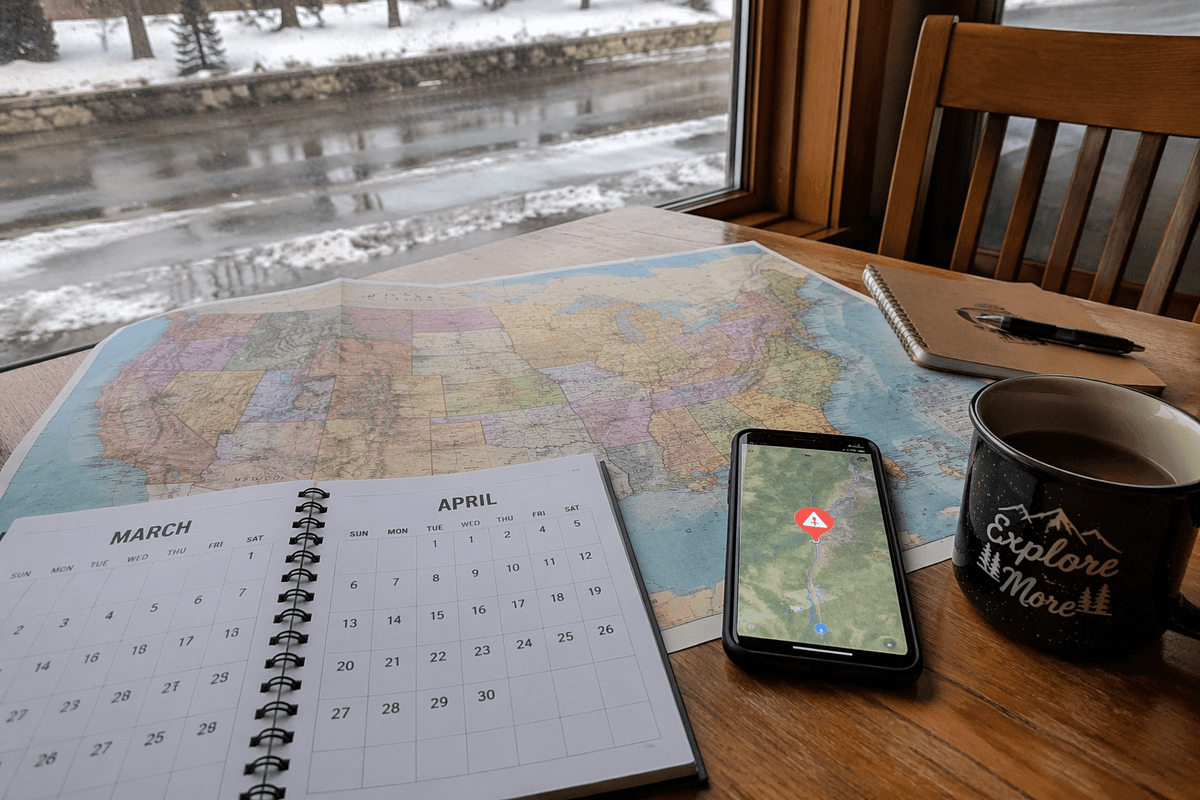
I hesitated on a March itinerary the moment I saw “Road Closed” pop up next to a mountain pass icon, even though the forecast in the city looked mild. On paper, spring felt like the safe, shoulder-season bargain; in reality, elevation turns it into a gamble where a sunny lunch can still end in slush by late afternoon. That’s the U.S. trick: seasons don’t just change temperatures, they change what’s even open.
If you’re planning 2–3 months ahead, let the calendar make the first cut, then choose the region that behaves well in that window. Late spring and early fall are forgiving for the Southwest (New Mexico, Arizona, Utah’s lower elevations) because you get long light and manageable heat, with the trade-off that popular parks still require timed entry or early starts. Summer flatters the Pacific Northwest and parts of the Rockies, but you’re accepting two risks that don’t show up in glossy photos: wildfire smoke and peak lodging prices, especially on weekends. Winter can be brilliant for cities (Chicago’s museums, New Orleans’ food) but punishing for scenic driving—short days and weather delays make “just one more stop” feel expensive.
Humidity and storms are their own kind of logistics. The Southeast and Gulf can be a value play outside peak summer, yet hurricane season turns flexible travelers into anxious spreadsheet people fast. Meanwhile, the Great Lakes and New England shoulder seasons reward anyone who likes small cities and diners more than bucket-list viewpoints: fewer reservations, less crowd flow, and drives that stay short. If your mood is “nature first,” pick the season that keeps trails and roads predictable; if it’s “food and neighborhoods,” you can tolerate worse weather because you’re not chained to a single scenic highway.
Second-trip places that feel totally different
I held my phone up at a rental-car counter in Albuquerque while the agent pointed at the “unlimited miles” line like it was a magic spell. Ten minutes earlier, the map made Santa Fe, Taos, and White Sands look like tidy neighbors; in real time, the distances felt like choices with consequences. That’s the second-trip shift: you’re not asking what’s famous, you’re asking what feels fundamentally different without turning your vacation into a driving job.
If your first trip was Northeast corridor cities, the Southwest (New Mexico + a corner of Arizona) is the cleanest contrast per day: dry air, big-sky light, and smaller cities where dinner doesn’t require a strategy. It works best in spring or early fall; midsummer heat pushes you into early starts, and higher-elevation nights can still surprise you. The trade-off is that “one more stop” often means an extra hour with fewer services—amazing when you like open roads, irritating if you get anxious about fuel, food, or check-in times.
For nature that feels opposite of desert drama, the Pacific Northwest gives you moody coast and forest within shorter hops—Portland/Seattle as hubs, then Olympic Peninsula or the Oregon Coast as the “other world” day. Summer is easiest for trail access, but it’s also when lodging tightens and smoke can flatten views. If you want a lower-stakes loop, the Great Lakes (Chicago–Milwaukee–Door County–Traverse City, or a Michigan-only arc) is quietly excellent: less reservation pressure, more small-city rhythm, and drives that stay humane—at the cost of fewer headline landmarks.
What I’d choose for one week
At 7:15 a.m. with a coffee going cold, I stared at a calendar and realized I only had seven nights that weren’t eaten by flights. The temptation was to “just add” Arizona or Colorado, because the map makes it look harmless. That’s exactly how you end up arriving everywhere at dusk, checking in hungry, and calling it a vibe.
If I had one week for a second trip, I’d take the highest contrast-per-mile: a New Mexico loop with two bases and one long transfer. Fly into Albuquerque, sleep there the first night (late arrivals happen), then do 3 nights in Santa Fe as your walkable anchor—food, galleries, day-trip flexibility without daily repacking. Use one early start for a Taos day (the drive is easy; the altitude and afternoon storms are the variable), and accept that you’ll see more if you don’t try to collect every viewpoint between towns.
Midweek, drive south for 2 nights in Las Cruces (or even Truth or Consequences if you want quieter), which sets you up for White Sands without turning it into a punishing out-and-back. The trade-off is a 3–4 hour transfer day with limited “cute stops,” but you buy yourself a calmer sunset visit and a buffer if heat, wind, or a random closure reshuffles the plan. I’d finish with 1 night back in Albuquerque near the airport—unromantic, reliable, and a good sign you picked a trip you can actually land.