When clothing costs rise faster than the laundry
It usually doesn’t feel like “spending on clothes” until a week shows up with two kids’ growth spurts, a work shirt that suddenly looks tired, and a pair of shoes that starts separating at the sole. The laundry rhythm stays the same, but the replacement rhythm speeds up—and the total creeps higher even if nobody’s “shopping.” The frustrating part is the timing: you’re buying because you have to, not because you found a deal, so price increases hit hardest right when the closet has no slack.
Looking at the month as a set of forced purchases changes the math. Trend buys are visible, but repeat replacements are the quiet driver: tees that twist after a few washes, pants that wear through at the inner thigh, kid uniforms that stain out of rotation. When the same categories keep reappearing, the problem isn’t just cost per item—it’s how often you’re being pushed back to checkout.
The first useful comparison is simple: are you losing money to volume (too many items), to timing (last-minute needs), or to durability (premature wear)? That answer determines whether “buy less,” “shop smarter,” or “extend life” will actually lower the total, instead of just shifting the pain to the next urgent purchase.
Name the non-negotiables before you cut anything
Once you’ve noticed which purchases are “forced,” the next friction is emotional: cutting feels responsible until the first Monday morning scramble. The mistake I see most is trimming categories that were quietly doing a job—an extra set of school pants that kept laundry from becoming an emergency, or the one reliable work outfit that prevents a midweek panic buy at full price. The goal isn’t a smaller closet; it’s fewer moments where the closet backs you into paying retail.
Start by naming what can’t break without creating downstream costs. For adults, that’s usually a minimum number of work-ready outfits that fit right now, plus one backup that covers spills, weather, or an unexpected meeting. For kids, it’s enough rotation to survive a missed laundry day, plus whatever is requirement-driven (uniform pieces, specific shoes, a jacket that actually handles the bus stop). If an item failing would force you into same-day shopping, it’s a non-negotiable—even if it isn’t “nice.”
Then cut around the edges with a constraint in mind: anything that doesn’t prevent an urgent replacement is negotiable. That’s often duplicates in the wrong fabric, “almost fits” items that never get worn, and aspirational pieces that demand special care you don’t have time for. You’re not reducing spending by being stricter; you’re reducing spending by protecting the few categories that stop repeat checkout.
Buy less without getting hit by last-minute needs
Once the non-negotiables are clear, “buy less” stops being a vague promise and turns into a stocking problem: how little can you own before timing starts charging you a premium. In my experience, the savings don’t come from cutting the count to the bone; they come from removing the categories that trigger emergency shopping. If a single missing item forces a same-day purchase (a kid outgrowing uniform pants, a work shirt failing on Sunday night), the closet is too tight—even if the total number of items looks “minimal.”
The practical move is to build a small buffer that’s boring on purpose. For each non-negotiable category, keep one “bridge” option that isn’t perfect but is acceptable: a backup work top, an extra pair of school pants, a second set of season-appropriate shoes. The constraint is cash flow—so set a cap and fill buffers only when there’s a deal, not when there’s pressure. That single rule flips the timing advantage back to you.
Then add a waiting lane for everything else. If a want-item survives two laundry cycles without being “needed,” it goes on a list, not into the cart. Most closets don’t overspend from big splurges; they overspend from small fixes made under deadline.
Shop smarter: pick the channel that matches reality
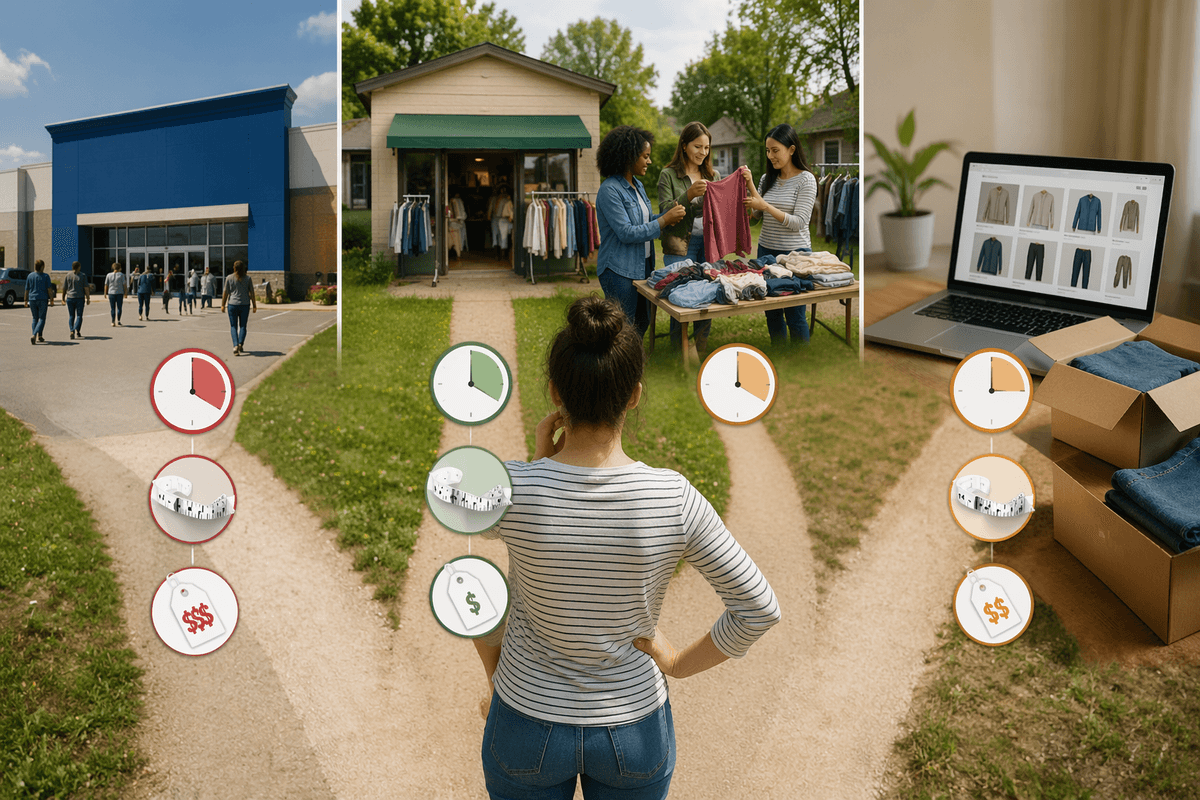
With the “waiting lane” in place, the next savings lever is less about finding a magical deal and more about choosing a buying channel that fits your constraints. If you only shop when something breaks, the cheapest option on paper can become the most expensive in real life—because it adds shipping delays, return hassle, or a second trip when sizing is wrong. The channel has to match how quickly you need the item and how picky the fit is.
For deadline needs (uniform pants, replacement shoes, a work top that has to look right on Monday), boring retail wins because it’s immediate and predictable. For flexible categories (kids’ play clothes, backup layers, spare hoodies), local thrift, Buy Nothing groups, and off-price stores can cut the per-item cost without risking a “nothing works” emergency. Online resale sits in the middle: great for brands you already know fit, but only if you budget for shipping and accept that returns may be limited or not worth the time.
I treat “cheap but uncertain” as a separate bucket. If it takes more than one try to get the right item, the savings evaporate fast.
Spend more only where it stops repeat replacements
The “cheap but uncertain” bucket is also where people accidentally pay twice: once for the item, then again for the replacement when it stretches out, pills, or can’t survive the wash schedule. If cash flow is tight, it’s tempting to avoid any higher price tag, but the most useful upgrade isn’t “nicer.” It’s the one that makes a problem category stop reappearing every 6–10 weeks.
In practice, I’d only spend more in the places with predictable failure and high inconvenience: shoes (especially school shoes), everyday pants that rub at the inner thigh, and outerwear that’s supposed to handle real weather. These are the items where one weak seam or cheap sole turns into a same-day purchase at full price. The constraint is still timing, so the test is simple: if it fails, will you be forced into an urgent replacement?
Everything else is a candidate for “good enough.” Tees, basic layers, and kid play clothes can be cheaper if they’re not the bottleneck. Paying extra only works if it reduces the number of checkouts, not if it just raises the average receipt.
Extend garment life with routines you can keep
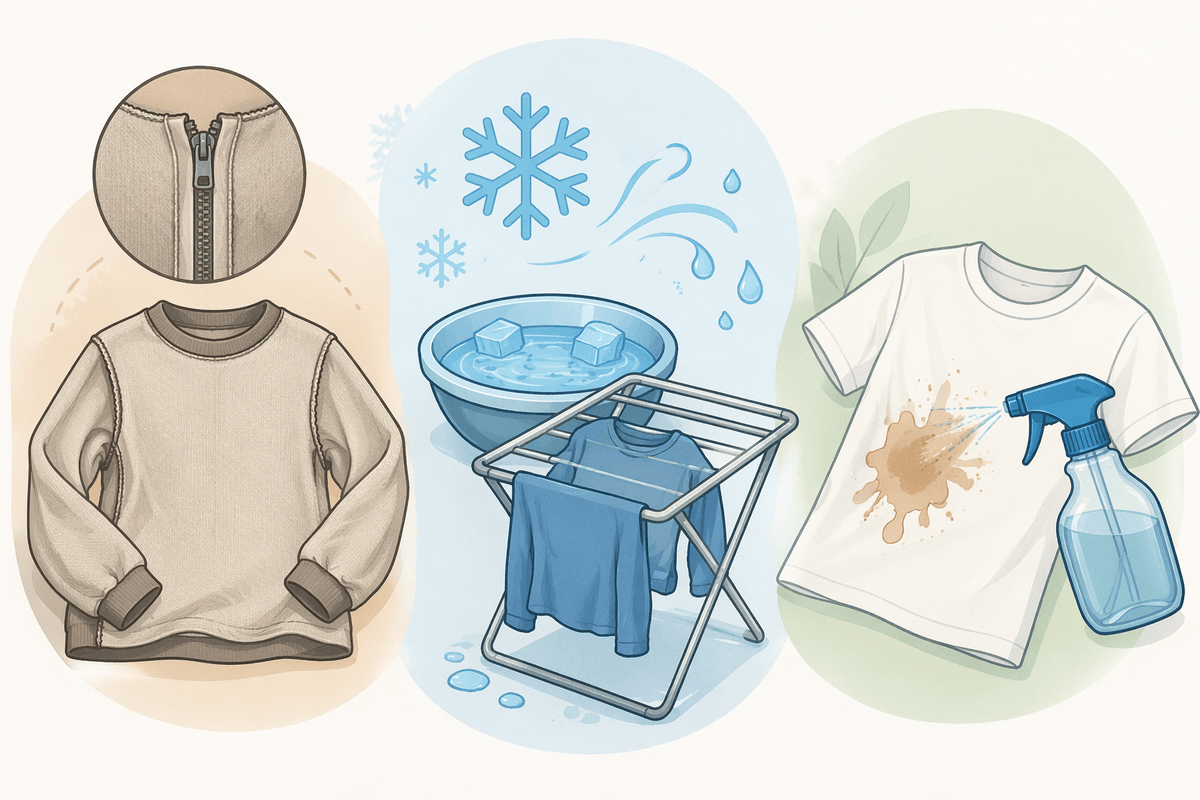
The moment you’ve paid a bit more for the categories that keep failing, it’s painful when they still die early because of avoidable wear. The catch is that most “garment care” advice assumes time you don’t have. A routine only saves money if it survives a busy week with a full hamper and a rushed morning.
I’d keep it to three habits that protect the repeat-replacement items. First, slow down abrasion: turn jeans and tees inside out, zip zippers, and wash heavy stuff (denim, hoodies) away from lighter knits. Second, reduce heat damage: default to cold water and air-dry anything that has stretch (leggings, uniform pants with elastane), because dryers quietly shorten their usable life. Third, treat stains like a timing problem: a cheap spray in the laundry area and a “hit it the same day” rule beats heroic weekend soaking.
If that feels like too much, pick one. The savings show up when the inner-thigh blowout happens a month later, not next payday.
Build your personal mix and test it for 30 days
At this point, the lever isn’t “more tips,” it’s choosing a mix you can actually run on autopilot. I like a simple split: one fix aimed at timing (the boring buffer), one fix aimed at durability (spend-upgrade in the failure category), and one fix aimed at volume (a hard pause on new wants). The constraint is that each choice has to survive a chaotic week—if it adds errands, returns, or extra laundry steps, it won’t stick long enough to pay off.
Run it for 30 days with a tiny scorecard: how many emergency purchases happened, how many items were returned or re-bought, and which category surprised you. If “emergencies” drop but laundry stress spikes, the closet got too tight. If you still replace the same item twice, the upgrade didn’t target the real failure point. Adjust one variable and re-test, not the whole system.

![6 Best Seeking Alpha Alternatives [Competitors’ Sites to Use]](static/image/2026/07/14/efb52e0a-28fa-4572-b12f-5ea63c79b09e.png)